
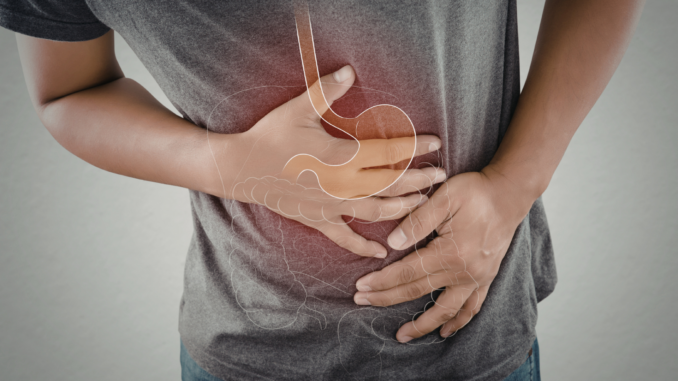
IBS (irritable bowel syndrome) serves as something of an umbrella term that covers a variety of truly-not-fun symptoms of digestive distress.
These symptoms of digestive unrest can include things like bloating, indigestion, upset stomach, and most commonly and perhaps importantly, dysregulated bowel movements. This can range from constipation to frequent and unpredictable bowel movements, including diarrhea. It covers the spectrum.
But what IBS truly is, however, is a disproportionately lifestyle-affecting ailment.
The reality of IBS
People who suffer from IBS often feel more than just an ailment. They often feel their entire lives being turned upside down, and that is not an exaggeration.
Unable to socialize normally or even leave the house comfortably knowing that an unpredictable bowel movement could strike at any moment.
This is why you also often see IBS associated with negative mental health outcomes such as anxiety or depression. [9]
So, finding possible modalities to help alleviate IBS and its symptoms is a high priority that I will happily tackle here.
The beginning of health
Many say that gut health is the beginning of health, and there is much truth to this sentiment.
An unhealthy gut can also mean an unhealthy immune system, as much of immune function resides in the gut. An unhealthy gut can lead to a myriad of other issues as anything negatively impacting digestion can disrupt our ability to process nutrients from food. This could also potentially allow harmful substances to leak out of the digestive system and into the bloodstream where they do not belong.
So, without further adieu, let’s see what science says about probiotics and whether or not probiotics could be a solution to this foundational health issue.
Reviewing the science of probiotics and IBS
I did a deep dive into the scientific literature from all around the world to find 14 meta-analyses published over the years representing hundreds of clinical trials that looked at probiotics and their effect on those with IBS. Let’s take a look at what they found.
Mixed probiotics and their effects on IBS in study participants
All studies analyzed found at least some positive effect of probiotics on IBS, far outweighing any neutral effects observed.
The science analyzed to date has found, in trial participants, to help:
- Improve quality of life [1] [4] [9]
- Improvement of symptoms [1] [2] [3] [5] [13] [14]
- Reduce bloating [4] [11] [12]
- Reduce abdominal pain [4] [5] [11] [12]
- Reduce flatulence [11]
Pretty good so far. Now how about single probiotic strains?
Single probiotics and their effects on IBS in study participants
(Note: this is not an exhaustive list. This only covers strains analyzed in the meta-analyses reviewed in this article.)
Following are the results of which single probiotics were found to help trial subjects with IBS.
Improve quality of life
- Lactobacillus plantarum [1] [9]
- Lactobacillus rhamnosus [4]
- Lactobacillus acidophilus [4] [9]
- Bifidobacterium longum [9]
- Saccharomyces [9]
- Clostridium butyricum [9]
- Bifidobacterium lactis [9]
- Lactobacillus casei strain Shirota [9]
Improve symptoms
- Bacillus coagulans [1]
- Lactobacillus acidophilus [6]
- Bifidobacterium strains [13]
- Lactobacillus strains [13]
- Saccharomyces strains [13]
Reduce bloating
- Lactobacillus rhamnosus [4]
- Lactobacillus acidophilus [4]
- Bacillus coagulans [6]
- Bifidobacterium infantis [7]
Reduce abdominal pain/discomfort
- Lactobacillus rhamnosus [4]
- Lactobacillus acidophilus [4]
- Bifidobacterium infantis [7]
- Saccharomyces strains [8] *some mild complications reported
Improve stool formation
- Bacillus coagulans [6]
- Saccharomyces cerevisiae [6]
Improve bowel movement difficulty
- Bifidobacterium infantis [7]
Not too shabby.
What is the verdict on probiotics for IBS?
First, these lists are truly presented for information purposes only. They are not exhaustive nor are they a prescription of what to take for certain ailments. Further studies could always confirm these findings or even contradict them.
What these studies do exhibit, however, is an abundance of science that shows probiotics of many varieties have shown significant positive effects on the symptoms of IBS. And while perhaps not all probiotic strains have these effects and some may have them to greater degrees than others, on the whole the evidence is seems very much in probiotics’ favor.
Which probiotics each person should take is specific to each person and should be discussed with a licensed healthcare practitioner to determine exactly which ones they might be, if any at all.
The gut microbiome strengthening process
Going forward we should ask ourselves why probiotics have this effect. That way, we can possibly find the source of the issue and how to set ourselves up for future success, perhaps in ways that probiotics alone cannot match.
And what we are likely seeing here is simply the positive effects of healing our gut microbiome, the collection of bacteria that line the walls of our digestive system, helping us digest our food, helping us create immune cells, and even creating vital nutrients our bodies use to thrive.
While taking probiotics may be a key to helping us repopulate our gut microbiome with these good bacteria, it is also just the first step in the journey.
It is what we do after that first step that can help solidify the health of our gut microbiome and improve even more.
What is the next step in creating a healthy gut microbiome?
Getting more good bacteria into our guts to crowd out the bad and help us digest food properly is one thing.
Keeping them there and helping them flourish is another.
It is at this point that we want to consider what we eat in order to ensure that we are feeding the good bacteria what they need to thrive.
As they thrive, so do we, which perhaps makes this part of the process the most important.
Good fiber from healthy plants
Good bacteria loves to eat fiber.
And different microbes love the fiber and plant compounds from all sorts of different plants.
A variety of plant sources containing fiber and different phytochemicals can not only help feed our good gut bacteria, but also help feed a diverse array of that good bacteria.
As we saw from all the different probiotic strains reported in the scientific literature to have benefits, there are many that we have studies and of course many, many more.
Remember, there are thousands of different strains of good bacteria found in the gut, with more likely being discovered all the time, so eating a varied diet to help feed the varied bacteria can help us operate at our best.
Whole plant foods supply exquisite fiber
One simple way to ensure we supply a diverse cast of good bacteria characters is to eat a wide variety of healthy plant foods with varying colors.
Those colors are more than just a calling card. They also indicate what types of phytochemicals, flavonoids, and polyphenols are present in those plants.
All those different plant-based compounds serve unique purposes in our body, and there are a variety of gut microbes that loves each of them. So, by giving them this variety, we do a better job of keeping a diverse group of gut microbes happy and thriving which helps keep our digestion happy and thriving.
And once we get into that groove where we have repopulated our digestive system with good bacteria and are subsequently able to eat a wider variety of foods that keeps those bacteria thriving, hopefully we will then see digestive issues being a thing of the past.
Be wary of fibermaxxing!
Now when it comes to fiber it is important to be careful adding it into your diet. Especially if you haven’t been eating much of it lately.
You need thriving gut microbes that can help you process that fiber, and if you haven’t built them up yet and your digestive system is not used to a lot of fiber, you need to gradually work up your intake over time.
As you do, those good gut microbes will feed on the food you are giving them. They will then begin to multiply and thrive and the rest of your digestive system as a whole will also become more accustomed to the presence of the fiber.
So make sure you do this gradually and listen to your body. If you do not, you could create a different kind of digestive unrest and experience many of the same symptoms you were trying to resolve, only from a different angle.
If you choose to increase your fiber intake, just remember to do so gradually and with as wide a variety of healthy food sources as you are able.
We are all unique
And our digestive systems are no different in this regard. Each one of us has a digestive system that has experienced its own history. Even if you share most of your meals with your partner, your family, etc., you still have consumed different foods in different patterns, having experienced different stressors that affect your gut. We are all unique and that matters.
That means what works for one may not work for another in the same way, so be sure to work with your licensed healthcare practitioner to ensure probiotics and fiber are safe and healthy for you. We are all different and digestive issues could come from many causes, many of which are notoriously difficult to diagnose. So treat this information, as with all the information I publish, as food for thought rather than a prescription.
STYLE x MOTIVATION
Don’t forget to shop No Gimmicks Health merch!
If you agree that you can take your health back and become your best version of you, then please consider sharing that message with the world with some of this super comfy and stylish gear!
Almost all shirts are 100% cotton, which is a natural fabric that importantly allows your skin to breathe.
Yet another aspect of how simple some health solutions really are.
Click here and pick out your faves!

The statements contained on this website have not been evaluated by the Food and Drug Administration and are not intended to diagnose, treat or cure any disease. Do not consume anything written about on this website if you are allergic to it.
The opinions expressed herein are for informational and educational purposes only and are not intended as a substitute for professional medical advice, diagnosis and treatment. Please consult a physician or health care professional for your specific health care or medical needs.
Please talk to your doctor before beginning any exercise or diet program, including those found on this website. The information provided on this site is not intended as a substitute for consultations with your doctor nor is it intended to provide medical advice specific to your condition.
References
[1] https://pubmed.ncbi.nlm.nih.gov/35433498/
[2] https://pubmed.ncbi.nlm.nih.gov/38999862/
[3] https://pubmed.ncbi.nlm.nih.gov/31480656/
[4] https://pubmed.ncbi.nlm.nih.gov/35807868/
[5] https://pubmed.ncbi.nlm.nih.gov/18461650/
[6] https://pubmed.ncbi.nlm.nih.gov/37686889/
[7] https://pubmed.ncbi.nlm.nih.gov/19277023/
[8] https://pubmed.ncbi.nlm.nih.gov/38661391/
[9] https://pubmed.ncbi.nlm.nih.gov/40929652/
[10] https://pubmed.ncbi.nlm.nih.gov/27296254/
[11] https://pubmed.ncbi.nlm.nih.gov/23548007/
[12] https://pubmed.ncbi.nlm.nih.gov/28166427/