
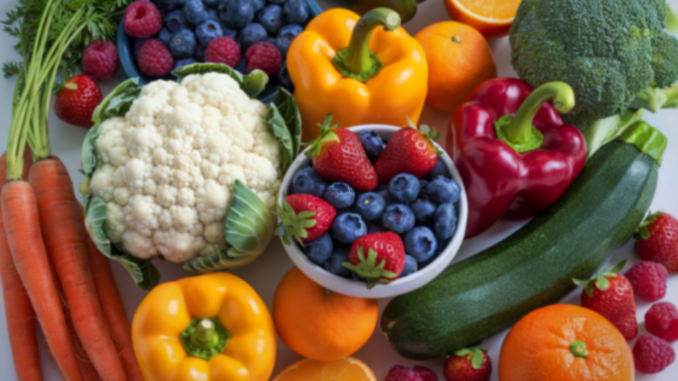
Is weight loss as simple as eating the foods that are traditionally thought of as healthy?
Maybe so.
Fruit and vegetables for weight loss: the science
A meta-analysis published in 2014 found that “high vegetable and fruit” intake resulted in more weight loss than in “low vegetable and fruit” intake groups. [1]
Additionally, another meta-analysis published in 2019 found that fresh fruit consumption did not lead to excess energy intake or weight gain, but did promote weight maintenance or modest weight loss. [2]
And last but not least, a meta-analysis published in 2018 found moderate quality evidence for an inverse association between vegetable intake and weight related outcomes, with some studies resulting in weight loss and others showing reduced risk of weight gain. [3]
Does this mean eating more fruit and vegetable will make us lose weight?
Perhaps.
The good news of these studies is, first of all, none of the studies showed any of the groups consuming higher amounts of fruits and vegetables to see any significant weight gain.
That’s a very good start.
On the other hand, while generally speaking these studies mostly showed some weight loss or reduced risk of weight gain, we cannot say the pounds literally melted off.
Which is okay! Steady and sustainable gains might be the most desirable goal anyway.
Why should we consider upping our fruit and vegetable intake?
It stands to reason that consuming more fruits and vegetables could, at a minimum, replace perhaps some less desirable foods on your plate.
In particular processed sweets, as fruits and their natural sweetness could help satisfy your sweet tooth, if you have one.
Secondly, when you break down the results of this entire series on weight loss, there is a common factor that runs through all the analyses:
Better health leads to better weight.
And yes, fruits and vegetable can very well contribute to better health.
Just look at some of the evidence scientific research has already found regarding fruits, vegetables, and weight loss:
Citrus fruits could help weight loss efforts.
Fiber could help weight loss efforts, and fruits and vegetables are full of fiber.
Blueberries could help weight loss efforts.
Flavonoids, found almost exclusively in fruits and vegetables, could help weight loss efforts.
Even vegetarian diets have shown evidence to help weight loss efforts.
And none of this even delves into the fact that fruits and vegetables are very vitamin-dense, which helps all of your body’s systems work better.
While none of this should be taken as an admonition to replace everything in your diet with fruits and vegetables, nor is it to say that you cannot lose weight without eating fruits and vegetables (you absolutely can), giving fruits and vegetables a more prominent place on your plate could be very beneficial in a large number of ways.
So if you are thinking of boosting your fruit and vegetable intake, be sure to discuss that with your licensed healthcare practitioner to ensure what you are doing is safe and appropriate for you.
If you agree that you can take your health back and become your best version of you, then please consider sharing that message with the world with some of this super comfy and stylish gear!
Almost all shirts are 100% cotton, which is a natural fabric that importantly allows your skin to breathe.
Yet another aspect of how simple some health solutions really are.
Click here and pick out your faves!

The statements contained on this website have not been evaluated by the Food and Drug Administration and are not intended to diagnose, treat or cure any disease. Do not consume anything written about on this website if you are allergic to it.
The opinions expressed herein are for informational and educational purposes only and are not intended as a substitute for professional medical advice, diagnosis and treatment. Please consult a physician or health care professional for your specific health care or medical needs.
Please talk to your doctor before beginning any exercise or diet program, including those found on this website. The information provided on this site is not intended as a substitute for consultations with your doctor nor is it intended to provide medical advice specific to your condition.
References
[1] https://pubmed.ncbi.nlm.nih.gov/25168465/