

Personal disclaimer:
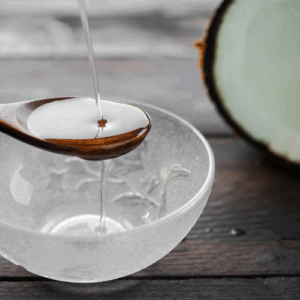
I love coconut oil.
I eat it every day.
I even brush my teeth with it!
But is it all it’s been cracked up to be?
Let’s try to figure it out without any bias.
What are the supposed benefits of coconut oil?
If you search for the health benefits of coconut oil, you’re sure to find a laundry list of miracles attributed to this food.
Things like:
- Weight loss
- Dementia-healing
- Anticancer
- Antibacterial
- Heart health
- and more!
The question we are looking at is whether or not there is sufficient scientific research to back up these claims.
The answer may be a mixed bag.
Now that does not mean the claims are not entirely true as science doesn’t necessarily look into every aspect of the things that are important to us. And often times when they do, the research may be a little lacking.
But it is important that we discover whether or not these claims are found in the scientific literature or are just claims.
It is very important to understand the difference.
So let’s take a look.
Does coconut oil promote heart health and healthy cholesterol levels?
Let’s just say the results are mixed right now.
While there may be an occasional outlier claim that coconut oil improves cholesterol and heart health, there are more studies right now that are not making that claim.
For example, two meta-analyses performed in 2020 both found diets that included coconut oil to raise both LDL (the “bad” kind) and HDL (the “good” kind) cholesterol levels. [1], [2]
Now we should allow for our understanding of cholesterol and what healthy levels are to evolve in the future, but as of now these are not the results people are looking for when it comes to “improving” cholesterol levels.
Does coconut oil contribute to a healthy mouth?
This is another popular claim attributed to coconut oil.
You may have heard of oil pulling with coconut oil, where people effectively “swish” coconut oil in their mouths, trying to “pull” it between their teeth while doing so as a means of creating a healthy mouth: teeth, gums and all.
And there may be something to that.
Which is in part why I brush my teeth with coconut oil often, as mentioned earlier.
While the research around oil pulling is limited, there is some research that shows some reduction in salivary bacterial colonies and some reduction in plaque as a result of oil pulling. [3]
Additionally, a randomized clinical trial performed in Spain in 2025 found that study subjects with periodontitis (gum disease) who were administered coconut oil found significantly reduced pathogenic bacterial families while at the same time promoting beneficial bacteria. They also found lowered inflammatory markers in the group that was administered coconut oil. [4]
And speaking of coconut oil reducing harmful bacteria…
Does coconut oil act as an effective antibacterial food?
The scientific research on this one, again, is not necessarily the strongest, although if we put all the pieces together, we might see a pretty picture that matches the anecdotal evidence.
While there is not a ton of research into coconut oil specifically, there has been some regarding coconut oil’s most prominent fatty acid, lauric acid.
Lauric acid is believed to be one of the main factors that contribute to coconut oil’s antibacterial prowess. And while the research is fairly sparse, there in fact is some research showing lauric acid’s positive effects against pathogenic bacteria, including this study looking at lauric acid’s ability to neutralize staphylococcus aureus in vitro. [5]
While more research is needed, not only to confirm this ability of coconut oil but also to determine just how much is necessary to achieve the desired effects, there is good reason to be hopeful and optimistic about coconut oil’s ability to rid the body of bad bacteria.
The question is, what evidence do we have to be so hopeful and optimistic about coconut oil’s antibacterial activity?

Coconut oil can aid in gum and oral health
This is where the pieces start to come together.
A randomized controlled trial in 2025 found that study subjects with periodontitis (gum disease) who were administered coconut oil found significantly reduced pathogenic bacterial families while promoting beneficial bacteria. They also found lowered inflammatory markers in the group administered coconut oil. [6]
Additionally, oil pulling was also studied in 2020 and found to show shows some reduction in salivary bacterial colonies and some reduction in plaque. [7]
Although these studies were limited to oral health, when you start to add the pieces together you can see the picture of a healthy antibacterial food coming together.
So while more research is needed to confirm, determine necessary dosages, etc., when you combine the research done into coconut oil’s oral antibacterial effects with lauric acid’s more general antibacterial effects, you can see reasoned evidence to be optimistic that coconut oil has the antibacterial properties to back up the claims of its abilities.
Is coconut oil a natural remedy for Alzheimer’s disease?
Perhaps one of the most famous claims is that coconut oil can help treat or even to a certain degree reverse degenerative cognitive conditions like Alzheimer’s disease (AD).
But is there any research to back it up?
It turns out there is.
In addition to years’ worth of anecdotal claims, there has been a fair amount of research done on the ability of both coconut oil and medium chain fatty acids’ ability to help those with Alzheimer’s disease.
And, frankly, both come out looking pretty good.

Coconut oil itself was found via a meta-analysis conducted in 2024 to have improved cognitive scores in study subjects compared to those in control groups. [8]
Another meta-analysis from 2023 found that supplementation with medium-chain fatty acids (MCT), of which coconut oil is rich, to have improved cognition in the majority of studies analyzed, with a small number showing no improvement. It is inferred that supplementation with MCTs resulted in an increase in ketone bodies, fueling the brain and resulting in increased brain energy metabolism. [9]
So while the MCTs in coconut oil may be the driving force behind its potential to help those with AD, coconut oil itself may be no slouch either.
Can coconut oil help those with metabolic syndrome?
Metabolic syndrome is an array of different ailments typically associated with abdominal obesity. It often includes such abnormalities as insulin resistance, elevated fasting glucose levels, and elevated blood pressure. Metabolic syndrome carries an increased risk of cardiovascular disease.
And coconut oil might be able to help.
Although there are many more, and perhaps more important, lifestyle choices to consider when winning against metabolic syndrome, coconut oil could be a tool in your toolbox.
While there is not a lot of research on the topic, a randomized clinical trial in 2024 found virgin coconut oil consumption in study participants to significantly improve oxidative stress status as well as insulin resistance. [10]
Of course, maintaining a healthy weight is one of the most important factors in defeating metabolic syndrome.
On that subject…
Can coconut oil help you lose weight?
Should we get excited?
Maybe.
Let’s break it down.
The theory goes that coconut oil can aid in weight loss by increasing metabolism. This is due in part the fact that its MCTs can bypass the normal digestive process and go straight to the liver to be converted into quickly available energy.
So much so that some people say it is a “negative calorie” food, claiming it results in more calories expended than consumed.
Well, those people are wrong, but it does expend more calories than normal.
Let’s first look at a handful of studies examining MCTs and their potential to aid weight loss.

- A clinical trial in 2003 found that MCTs may help reduce weight when consumed in an energy-balanced diet. This study involved obese women and saw MCTs result in greater energy expenditure and fat oxidation. [11]
- Another clinical trial in 2003 involving healthy overweight men also showed MCTs to result in greater energy expenditure and fat oxidation than LCTs. [12]
- In 2007, a randomized controlled trial involving 40 “free-living” man in an urban area of China showed similar results, with those in the MCT group showing a reduction in body weight, waist circumference, and appetite. [13]
- And in 2008, another randomized controlled trial consisting of 31 overweight men and women found MCTs to result in lower body weight and greater loss of fat mass than olive oil consumption as part of a weight loss diet. [14]
So that’s great about MCTs. They seem to have some real potential when used properly.
But what about coconut oil itself?
Coconut oil needs to be looked at a bit differently because it is not comprised entirely of MCTs. That may impact its capabilities in the weight loss department, but its full spectrum of beneficial nutrients may come with a number of other benefits, as discussed all throughout this article.
When it comes to weight loss, however, there is some hopeful news.
A systematic review in 2023 found those consuming coconut oil showed a small but statistically significant reduction in body weight, BMI, and percentage of fat mass. [15]
The next question is, do we know how coconut oil might yield these kinds of results?
The answer is likely fairly complex with a number of factors contributing including its concentration of MCTS. One additional aspect that has been studied to some extent, however, is coconut oil’s potential to help curb appetite.
Let’s take a look at some of those studies:

Coconut oil and appetite reduction
- A randomized crossover study in 2022 looking at 10 normal weight and 10 obese, metabolically healthy male subjects between 19-40 years old found those consuming coconut oil at breakfast saw significantly decreased desire to eat after 180 minutes compared to those who consumed olive oil at breakfast. [16]
- A second randomized crossover study found coconut oil to result in more fullness compared to olive oil among 16 healthy subjects. [17]
- A randomized control trial studying 15 adult women with excess body fat found coconut oil to help reduce appetite, although they did not find it to increase energy metabolism. [18]
- Another study concluded that coconut oil did not have the same appetite-suppressing effects as MCT oil. While coconut oil still did exhibit appetite-suppressing effects, it did not do so to the same extent as MCT oil when compared to a control diet. [19]
Conclusion: Coconut oil is a pretty great health food
When you add it all together, coconut oil is pretty great.
There is solid evidence that coconut oil:
- Can help fight bad bacteria
- Can help reduce appetite and aid in weight loss,
- Can potentially aid against metabolic syndrome
- And has some pretty solid support for claims it can help improve symptoms of Alzheimer’s disease.
- With perhaps even more evidence to come in the future!
Pretty good for such a cheap, simple food with tons of uses in the kitchen and great availability at the grocery store.
Special tip: Virgin or extra virgin coconut oil is the kind with all these potential benefits!
So remember, your health need not be so complicated. Powerful health is closer than you think.
In most cases, all you really have to do is:
Keep it simple and do the work.
Thank you for being here again and all the best to you!
If you agree that you can take your health back and become your best version of you, then please consider supporting this message with some of this super comfy and stylish gear!
Almost all shirts are 100% cotton, which is a natural fabric that importantly allows your skin to breathe.
Yet another aspect of how simple some health solutions really are.
Click here and pick out your faves!

The statements contained on this website have not been evaluated by the Food and Drug Administration and are not intended to diagnose, treat or cure any disease. Do not consume anything written about on this website if you are allergic to it.
The opinions expressed herein are for informational and educational purposes only and are not intended as a substitute for professional medical advice, diagnosis and treatment. Please consult a physician or health care professional for your specific health care or medical needs.
Please talk to your doctor before beginning any exercise or diet program, including those found on this website. The information provided on this site is not intended as a substitute for consultations with your doctor nor is it intended to provide medical advice specific to your condition.
[1] https://pubmed.ncbi.nlm.nih.gov/31928080/
[2] https://pubmed.ncbi.nlm.nih.gov/33096510/
[3] https://pubmed.ncbi.nlm.nih.gov/32923724/
[4] https://pubmed.ncbi.nlm.nih.gov/40085302/
[5] https://pmc.ncbi.nlm.nih.gov/articles/PMC6817632/
[6] https://pubmed.ncbi.nlm.nih.gov/40085302/
[7] https://pubmed.ncbi.nlm.nih.gov/32923724/
[8] https://pubmed.ncbi.nlm.nih.gov/39589946/
[9] https://pubmed.ncbi.nlm.nih.gov/36633304/
[10] https://pubmed.ncbi.nlm.nih.gov/37409587/
[11] https://pubmed.ncbi.nlm.nih.gov/12532160/
[12] https://pubmed.ncbi.nlm.nih.gov/12634436/
[13] https://pubmed.ncbi.nlm.nih.gov/17570262/
[14] https://pubmed.ncbi.nlm.nih.gov/18326600/
[15] https://pubmed.ncbi.nlm.nih.gov/34786908/
[16] https://pubmed.ncbi.nlm.nih.gov/36112590/
[17] https://pubmed.ncbi.nlm.nih.gov/37403210/