
We’ve profiled some pretty heavy hitters on this site.
Super healthy and super healing foods like raw honey, coconut oil, and more as the list of amazing real foods continues to grow.
But, when it comes to health and healing benefits, it is hard to beat black seed oil.
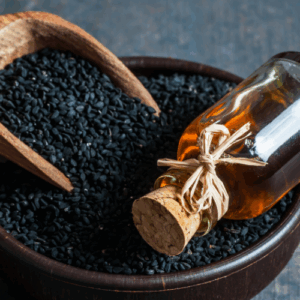
Black seed oil comes from the seeds of the nigella sativa plant. Throughout this article, you will see both terms referenced.
Black seed sometimes is also sold in powder or capsule form, but for the purposes of our investigation here, we will refer to black seed oil as the superior supplement form.
Which is another point of distinction. Although black seed oil is the pressed oil from the black seeds of nigella sativa, sometimes referred to as black cumin seeds, it is a supplement rather than a traditional cooking or culinary oil, like olive oil or coconut oil.
So, with a little background out of the way, let’s get right to the top 10 benefits of nigella sativa, straight from the scientific literature.
Note: All sources are provided beneath the article with links to each of the studies referenced.
Second note: None of the information provided here is to be taken as medical advice. There are a number of factors that go into prescribing treatments, unique to each person. Consult your licensed healthcare practitioner before consuming anything or engaging in any activity based on information found on this site.
Now let’s get to it.
Black seed oil could aid in weight loss
While this may not be the most important or heavily documented of black seed oil’s many benefits, let’s face it.
This is what many of us are looking for!
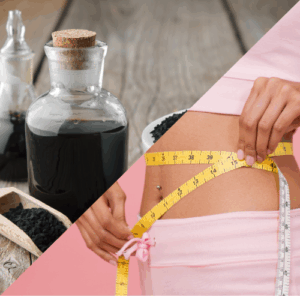
To back up this claim, two meta-analyses published in 2018 found that supplementation with nigella sativa significantly reduced body weight, BMI, and waist circumference.
More research is needed, but the evidence is starting to reveal itself. [1] [2]
Black seed oil could help lower blood pressure
Multiple meta-analyses published within the past 10 years have found nigella sativa to significantly reduce both systolic and diastolic blood pressure when compared to control groups. [3] [4]
Black seed oil could help reduce blood sugar and insulin resistance
This is a biggie.
Insulin resistance and elevated blood sugar are related to a number of chronic ailments that have been plaguing modern society, such as diabetes and metabolic syndrome while also contributing to weight gain.
The good news is the science documenting black seed oil’s potential to lower blood sugar and reduce insulin resistance is stout.
Numerous meta-analyses and systematic reviews have documented nigella sativa’s performance in studies in terms of showing significant reductions in fasting blood glucose, insulin resistance, postprandial (post-eating) blood glucose, as well as hemoglobin A1C, which is used to measure average blood glucose over 2-3 months and diagnose diabetes. [5] [6] [7] [8] [9]
Black seed oil could help lower inflammation
A number of meta-analyses may have uncovered a laundry list of inflammatory improvements driven by black seed oil supplementation.
Evidence was found showing nigella sativa exhibited positive effects on a number of inflammatory and oxidative stress markers, such as on C-reactive protein (CRP), tumor necrosis factor α (TNFα), and malondialdehyde (MDA) which is a biomarker of cell damage.
They also found nigella sativa to significantly improve total antioxidant capacity (TAC), glutathione peroxidase (GPx) which protects the body from oxidative damage, and superoxide dismutase (SOD), an antioxidant enzyme. [10] [11] [12]
To sum up the theme of many of these analyses, one meta-analysis concluded that nigella sativa “could be associated with improved oxidative stress and inflammation in patients with metabolic syndrome and related disorders.” [13]
Black seed oil could help lower cholesterol
Multiple meta-analyses published since 2016 have found nigella sativa supplementation to be significantly associated with a reduction in total cholesterol, LDL cholesterol (the “bad” kind), and triglyceride levels. [14] [15] [16]
Black seed oil could help relieve osteoarthritis
A meta-analysis in 2024 found that topical application of black seed oil improved pain scores among study subjects in 75% of studies analyzed. Oral use of black seed oil resulted in lower pain scores in 50% of studies analyzed, however black seed oil capsules were not found to be effective in any of the studies reviewed. [17]

Black seed oil could help treat asthma
A meta-analysis of randomized controlled trials in 2020 found that supplementation with nigella sativa “may provide additional benefits for the treatment of asthma.” [18]
Black seed oil could help treat non-alcoholic fatty liver disease
A meta-analysis in 2021 found that supplementation with nigella sativa improved the levels of many markers of non-alcoholic fatty liver disease (NAFLD) and “was effective in the treatment of NAFLD”. [19]
Black seed oil could help prevent cardiovascular disease
Although many factors contributing to or encompassed within cardiovascular disease have been covered in various sections already, it is important to note the combination of benefits nigella sativa could provide and how those together might help prevent cardiovascular disease.
With that being said, a meta-analysis published in 2025 found a laundry list of positive effects of nigella sativa supplementation in the scientific literature. It found nigella sativa to have significantly improved in research subjects the following:
- Body fat percentage
- BMI
- Skeletal muscle mass
- Waist circumference
- Blood pressure
- Mean arterial pressure
- Fasting blood sugar
- HbA1C
- Postprandial blood glucose
- Insulin sensitivity
- C-reactive protein
- Interleukin-6
- Tumor necrosis factor alpha
- HDL, LDL, and total cholesterol
- Triglycerides
- Total antioxidant capacity
- and more.
All of these can be cardiovascular disease risk factors and, according to the researchers, “our findings suggest that N. sativa could be a promising adjunct therapy for improving cardiovascular disease (CVD) risk factors.” [20]

And last but not least:
Could black seed oil be an anticancer food supplement?
Numerous meta-analyses have been conducted on the scientific literature surrounding the potential anticancer effects of nigella sativa and one of its main constituents, thymoquinone.
According to a review published in 2021, nigella sativa “exerts significant antiproliferative effects against various types of cancer, such as liver, colon, breast, cervical, lung, pancreatic, prostate cancer, etc.” [21]
A study published in 2022 found thymoquinone to cause cell cycle arrest and apoptosis in two types of liver cancer cell lines. [22]
Additionally, a systematic review published in 2025 found thymoquinone to enhance the efficacy of chemotherapeutic agents “by inducing apoptosis, enhancing autophagy, inhibiting tumor growth, and regulating cancer cell signaling pathways as well as multiple phases of the cell cycle.” They also found that it reduced chemotherapy-related toxicity. [23]
Black seed oil may be one of the best nutritional supplements there is
Thank you for sticking around and checking out this impressive list of potential health benefits of black seed oil. I certainly hope you found it was worth it.
When you look at the available scientific literature, it becomes readily apparent that black seed oil could be everything it is cracked up to be. With evidence supporting claims of its ability to help prevent or treat such a long list of ailments, it is easy to see why so many people have sworn by it for thousands of years.
And with such a long list of possible benefits, it could also help serve to simplify supplement routines by helping to reduce the sheer amount someone might want to take and replace those with fewer supplements with greater abilities. Black seed oil could be one of those supplements.
Thank you again for being here and remember, becoming healthy and thriving does not need to be complicated.
It can be simple. It can be enjoyable. And it can be liberating.
Just keep it simple and do the work!
If you agree that you can take your health back and become your best version of you, then please consider supporting this message with some of this super comfy and stylish gear!
Almost all shirts are 100% cotton, which is a natural fabric that importantly allows your skin to breathe.
Yet another aspect of how simple some health solutions really are.
Click here and pick out your faves!

The statements contained on this website have not been evaluated by the Food and Drug Administration and are not intended to diagnose, treat or cure any disease. Do not consume anything written about on this website if you are allergic to it.
The opinions expressed herein are for informational and educational purposes only and are not intended as a substitute for professional medical advice, diagnosis and treatment. Please consult a physician or health care professional for your specific health care or medical needs.
Please talk to your doctor before beginning any exercise or diet program, including those found on this website. The information provided on this site is not intended as a substitute for consultations with your doctor nor is it intended to provide medical advice specific to your condition.
[1] https://pubmed.ncbi.nlm.nih.gov/29559374/
[2] https://pubmed.ncbi.nlm.nih.gov/29857879/
[3] https://pubmed.ncbi.nlm.nih.gov/27512971/
[4] https://pubmed.ncbi.nlm.nih.gov/37341696/
[5] https://pubmed.ncbi.nlm.nih.gov/31817324/
[6] https://pubmed.ncbi.nlm.nih.gov/29154069/
[7] https://pubmed.ncbi.nlm.nih.gov/30873688/
[8] https://pubmed.ncbi.nlm.nih.gov/32394508/
[9] https://pubmed.ncbi.nlm.nih.gov/39181437/
[10] https://pubmed.ncbi.nlm.nih.gov/33559935/
[11] https://pubmed.ncbi.nlm.nih.gov/37036558/
[12] https://pubmed.ncbi.nlm.nih.gov/39709091/
[13] https://pubmed.ncbi.nlm.nih.gov/37859312/
[14] https://pubmed.ncbi.nlm.nih.gov/26875640/
[15] https://pubmed.ncbi.nlm.nih.gov/29154069/
[16] https://pubmed.ncbi.nlm.nih.gov/32394508/
[17] https://pubmed.ncbi.nlm.nih.gov/38650731/
[18] https://pubmed.ncbi.nlm.nih.gov/31892440/
[19] https://pubmed.ncbi.nlm.nih.gov/33728708/
[20] https://pubmed.ncbi.nlm.nih.gov/40714301/
[21]https://pubmed.ncbi.nlm.nih.gov/33916916/