
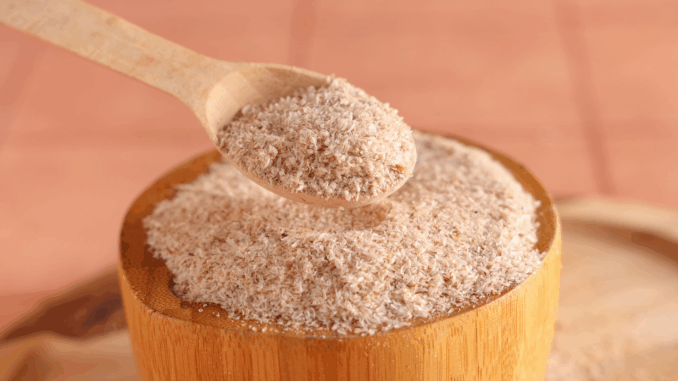
In our quest to identify means of maintaining a healthy weight without resorting to restrictive calorie-counting, we have come upon the fiber-rich psyllium husk.
You may have seen psyllium in stores. It has been sold for many years as a popular form of soluble fiber.
Soluble fiber dissolves in water. It absorbs waiter in the gut and creates a type of gel-forming substance in the stomach. This can aid in slowing digestion and in assisting the absorption of nutrients.
As the fiber absorbs the water and expands in the gut, it can also enhance feelings of fullness.
Before we get into whether or not if could be a good fit for a weight loss or, better yet, weight management, plan, it is worth mentioning some of the more common reasons people use psyllium husk supplements.
Those can include helping to relieve diarrhea, helping to reduce gut inflammation that leads to irritable bowel syndrome (IBS), and helping to flush out the “bad” cholesterol (LDL) as fiber is known to do.
Can psyllium help us lose weight?
While psyllium does have characteristics that can obviously seem to be connected to a healthier life, such as aiding in the absorption of nutrients and reducing bad cholesterol, as well as characteristics that seem to be connected to weight loss such as increasing feeling of satiety, what does the science have to say?
A meta-analysis published in 2023 found that non-fermented psyllium fiber, consumed prior to meals, was effective in promoting weight loss and as reductions in BMI and waist circumference in overweight and obese research participants. The mean dosage analyzed was 10.8 g per day. [1]
How can psyllium help aid weight loss?
There is some evidence pointing to fiber having this kind of effect. That could be due to some of the factors discussed already, such as enhancing the feeling of fullness which could help prevent overeating.
Perhaps improved nutrient absorption which could positively impact metabolic health by providing more nutrients necessary for metabolic functions could also play a factor.
Because the gel-like substance formed by psyllium husk in the gut helps to slow down absorption, it slows down the absorption of carbohydrates in kind. This can help to slow blood sugar spikes after eating, which can also help reduce the amount of insulin the body needs to produce to escort those sugars around the body.
And of course anything that has a positive effect on blood sugar and lowering of insulin, the “fat storing hormone” is an obvious candidate for psyllium’s observed weight reducing effect.
These are all possibilities and speculation, of course. If you decide you would like to try incorporating a psyllium husk supplement into your diet or health and wellness plan, always consult with your licensed healthcare practitioner before doing so. It is very important to ensure that anything consumed or practiced is safe and appropriate for you, including but not limited to ensuring there are no allergies to anything consumed.
Hopefully this provided some interesting information and some fiber-rich food for thought!
If you agree that you can take your health back and become your best version of you, then please consider sharing that message with the world with some of this super comfy and stylish gear!
Almost all shirts are 100% cotton, which is a natural fabric that importantly allows your skin to breathe.
Yet another aspect of how simple some health solutions really are.
Click here and pick out your faves!

The statements contained on this website have not been evaluated by the Food and Drug Administration and are not intended to diagnose, treat or cure any disease. Do not consume anything written about on this website if you are allergic to it.
The opinions expressed herein are for informational and educational purposes only and are not intended as a substitute for professional medical advice, diagnosis and treatment. Please consult a physician or health care professional for your specific health care or medical needs.
Please talk to your doctor before beginning any exercise or diet program, including those found on this website. The information provided on this site is not intended as a substitute for consultations with your doctor nor is it intended to provide medical advice specific to your condition.
References